Marketing management is the discipline of planning, organizing, executing, and analyzing marketing strategies to satisfy customer needs and achieve business goals. In simple terms, it means creating a marketing plan that aligns with your company’s objectives and then running campaigns to meet those objectives. Effective marketing management covers all stages of the customer journey – from researching the market to launching products and measuring results – while continually optimizing for better results. It involves a mix of creative strategy (like branding and messaging) and data-driven execution (like tracking campaign performance) to drive growth.
In practice, a marketing manager will conduct market research, segment target audiences, develop the product offering, set pricing, choose distribution channels, and run promotions. These core tasks form a feedback loop of strategy and analysis. For example, one definition describes marketing management as “planning, executing, and optimizing marketing activities” to deliver customer value and drive revenue. Another expert definition emphasizes that marketing management involves “strategic marketing programs… aligning with wider business objectives” using customer insights and performance metrics. In other words, it’s about using market data and customer feedback to guide every marketing decision, ensuring each campaign moves the company closer to its goals.
Why Marketing Management Matters
A strong marketing management approach is essential because it ensures marketing efforts support real business goals. Well-executed marketing management aligns marketing campaigns with company objectives such as revenue growth, customer acquisition, or brand awareness. This alignment makes it easier to measure impact and prove ROI. For instance, by linking campaigns to specific targets (like lead generation or sales), marketing managers can demonstrate how each activity contributes to the bottom line. Good management also improves efficiency: it streamlines workflows, reduces duplicate efforts, and helps teams execute faster.
Moreover, marketing management keeps the customer at the center. By continually researching and analyzing customer needs, marketing teams can tailor products and messages to match what people want. As a result, companies are better able to satisfy customer needs while achieving business goals. In fact, one source notes that a key feature of marketing management is its customer-centric focus: it “helps to understand and satisfy the customer’s needs” in order to drive exchanges between buyer and seller. When done well, marketing management turns insights into strategy – making customers happy and businesses successful.
Key Marketing Concepts and Frameworks
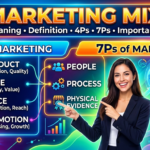
Marketing management relies on several classic frameworks. A foundational one is the marketing mix (4Ps): Product, Price, Place, and Promotion. The marketing manager’s job is to adjust each P to fit the strategy and market conditions, maximizing sales and ROI. For example:
- Product: Define and develop the product or service with the customer’s needs in mind. This includes features, quality, and branding.
- Price: Set a price based on production costs, target market, and demand. Pricing might use strategies like discounts, bundles, or premium pricing.
- Place: Decide how and where customers will buy it – online, in stores, through distributors, or via direct sales. This covers logistics, e-commerce, retail partnerships, etc.
- Promotion: Plan advertising, content marketing, sales promotions, social media, and public relations to raise awareness and generate demand. This is how you communicate the product’s value to the market.
For service-oriented businesses, the mix is often extended to 7Ps by adding People, Process, and Physical evidence. People refers to staff and customer service, Process covers the customer experience flow, and Physical evidence means the environment or materials (like signage, packaging) that reinforce the brand. A modern marketing manager will adjust all these elements to create a cohesive strategy.
Another key concept is market segmentation and positioning. This means dividing the market into groups (segments) and tailoring your marketing for each. Effective segmentation lets a business target the right customers with the right message. Positioning then defines how you want your product or brand to be perceived in the minds of those customers (for example, as a luxury item, a budget choice, or an innovative solution). These ideas – often called STP (Segmentation, Targeting, Positioning) – are central to marketing management.
Finally, marketing management often follows different philosophies over time, such as the production concept (focus on efficient production), product concept (focus on product quality), selling concept (push selling), marketing concept (focus on fulfilling customer needs), and societal concept (considering societal well-being). Today, most organizations aim for a mix of customer satisfaction and brand ethics, reflecting a blend of these ideas.
Marketing Management Process
Creating a marketing plan is a structured process. It typically starts with market research to gather insights on customers, competitors, and trends. Next comes goal setting – defining clear, measurable objectives (e.g. increase market share, boost brand awareness, or hit a sales target). Then teams do segmentation and targeting to identify which customer groups to focus on. With audiences defined, they work on positioning and messaging – developing the brand story and value proposition that will appeal to those segments.
Once the strategy is set, the planning and execution phase kicks in. Marketers choose channels (social media, email, SEO, ads, etc.), create content, and launch campaigns to reach the target audience. This stage often involves a marketing calendar or project management system to coordinate multiple campaigns and deadlines. During execution, teams continuously track performance by monitoring metrics like website traffic, conversion rates, and customer engagement. This data-driven monitoring allows them to optimize – for example, pausing low-performing ads or tweaking messaging – to improve ROI on the fly.
In summary, key steps in the marketing management process include:
- Market Research: Gather data on customer needs, market size, competitors, and trends.
- Goal Setting: Define what success looks like (KPIs for brand, sales, growth).
- Segmentation & Targeting: Identify and profile the most valuable customer segments.
- Positioning & Strategy: Craft your value proposition and decide on channels and tactics to reach each segment.
- Campaign Execution: Launch coordinated campaigns across chosen channels, using creative content and offers.
- Performance Tracking: Monitor KPIs (like conversions, ROI) and analyze results in real time.
- Optimization: Refine your approach based on data (A/B test elements, reallocate budget) to continually improve results.
Role of the Marketing Manager
A marketing manager (or director) is responsible for overseeing this entire process. They define the marketing strategy, lead execution, and ensure it all serves the bigger business purpose. In practical terms, their duties include:
- Setting goals and planning marketing campaigns that support growth and brand positioning.
- Leading campaigns across channels (digital, content, social, email, events) to engage customers.
- Managing budgets and resources, and coordinating with teams (creative, sales, product) to execute the plan.
- Analyzing performance data to optimize campaigns – tracking ROI, conversion rates, and other KPIs.
- Staying on top of trends and technology (like marketing automation or AI tools) to keep the marketing efforts innovative and efficient.
In short, a marketing manager ensures “marketing efforts align with business goals and deliver measurable impact.”. In modern organizations, this role is highly data-driven. Managers often oversee tools that automate tasks (e.g. email triggers, social schedulers) and analyze user data to make decisions. They coordinate between marketing and other departments, from sales to product design, to make sure campaigns are on brand and on target.
Marketing Trends and Technology
Marketing management is evolving rapidly with new technology. In 2026, for instance, nearly every marketing team relies on AI and data analytics. According to a recent report, 96% of marketers now use AI tools in their workflows. AI helps with tasks like analyzing customer behavior, generating content, and personalizing campaigns at scale. Teams that leverage AI see faster insights and higher performance; in fact, the report notes these teams are more likely to meet revenue goals and grow faster.
Alongside AI, marketing teams are also focusing on workflow efficiency. Research shows that highly efficient teams (with integrated tools and streamlined processes) are twice as likely to hit their revenue targets compared to less efficient teams. This means using connected marketing platforms, centralizing data, and reducing duplicate work. In practice, that could involve using a unified marketing platform or templates to standardize campaign planning.
Another trend is accountability: more and more, marketing is tied directly to revenue. For example, 88% of marketing leaders today are responsible for revenue targets. This puts pressure on marketing management to not just run campaigns, but to prove ROI. Good marketing managers address this by tracking metrics closely and reporting on results.
Despite these changes, the core of marketing management remains the same: understand your customers and deliver value to them. Whether through traditional channels or cutting-edge tools, marketing management is about connecting products and services to people’s needs in the most effective way possible.
Conclusion
Marketing management is the art and science of meeting customer needs while driving business success. By following a structured process – from research and planning to execution and analysis – companies can create marketing strategies that work. Core frameworks like the marketing mix (4Ps) and segmentation/positioning guide the approach, while technology and data allow for constant optimization.
In practice, successful marketing managers are those who keep everything aligned: they align campaigns with business goals, they align messages with customer needs, and they align processes with efficiency and innovation. When done well, marketing management turns strategy into results – boosting brand awareness, attracting customers, and ultimately growing the bottom line.
Sources: Reputable marketing resources and industry guides on marketing management principles and trends, including definitions, marketing mix frameworks, and modern best practices.